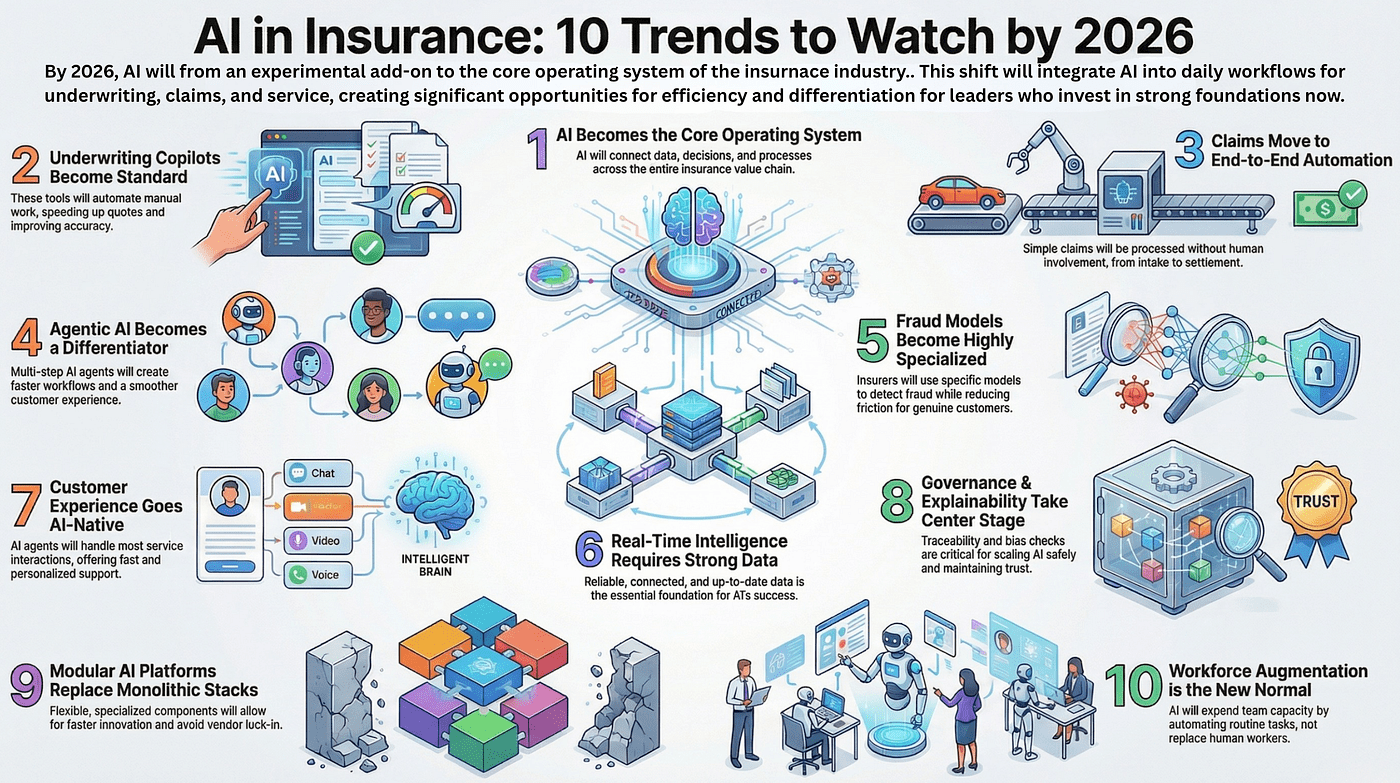
As we step into April 2026, the global insurance landscape is no longer Future Insurance Trends 2026 what it used to be. The traditional “pay-and-wait” model has been replaced by a proactive, data-driven, and highly personalized ecosystem. Driven by Artificial Intelligence, Blockchain, and the Internet of Things (IoT), Future Insurance Trends 2026 are redefining how individuals and businesses protect their assets.
In this comprehensive guide, we will dive deep into the ten most significant shifts in the insurance industry this year and how you can navigate them to secure your financial future.
1. AI-Powered Hyper-Personalization: The End of “One-Size-Fits-All”
The most prominent trend in 2026 is the total death of generic insurance policies. Today, AI algorithms analyze thousands of data points—from your daily steps to your driving habits—to create a policy tailored specifically for you.
Just as we explored in our case study on How AI Built a $1.8 Billion Company automation and machine learning are now the backbone of business scaling. In the insurance sector, this means lower premiums for those who maintain a healthy lifestyle and higher accuracy for risk assessment for Future Insurance Trends 2026.
2. Cyber-Resilience and Digital Asset Protection
As our lives move further into the digital realm, protecting “digital wealth” has become more critical than protecting physical gold. In April 2026, cyber insurance is no longer just for big corporations; it is a household necessity.
Modern policies now cover:
-
Deepfake Fraud Protection: Reimbursing losses from AI-generated voice or video scams.
-
Crypto-Asset Insurance: Securing your private keys and digital wallets against sophisticated hacks.

As mentioned in our detailed guide on Binance User Protection 2026, the security of digital exchanges is evolving, but individual insurance provides that extra layer of “Cyber-Resilience” every investor needs.
3. Parametric Insurance: The Solution to Climate Uncertainty
With climate change causing more frequent and severe weather events, traditional claims processing became too slow. Enter Parametric Insurance. Instead of waiting for a manual damage assessment, these policies use “Smart Contracts” that trigger an automatic payout the moment a pre-defined event occurs Future Insurance Trends 2026 (e.g., a specific wind speed or earthquake magnitude).
According to recent data from Swiss Re Institute, parametric models have reduced the claims waiting period from months to mere minutes in early 2026.
4. The Integration of Longevity Science and Health Coverage
In 2026, health insurance providers have shifted their focus from “sick care” to “longevity care.” Using bio-hacking data and wearable health tech, insurers now offer massive discounts to policyholders who meet specific biological markers.
This trend is part of a larger movement where Future Insurance Trends 2026 companies act as your “health partners,” providing you with the tools and data to live longer, thereby reducing their long-term claim liabilities.
5. Usage-Based Auto Insurance and Autonomous Liability
The automotive world has changed, and so has its insurance. In April 2026, “Pay-as-you-drive” (PAYD) and “How-as-you-drive” (HAYD) models are the standard. Sensors in electric and autonomous vehicles transmit real-time data to insurers.

Interestingly, the liability is shifting from the driver to the software manufacturer. If an AI-driven car has an accident, the insurance claim is often settled between the insurer and the car’s software provider, rather than the individual passenger.
6. Blockchain for Transparent and Fraud-Free Claims
Blockchain technology has finally matured in the insurance sector. In 2026, all policy documents and claim histories are stored on a decentralized ledger. This prevents “double-dipping” fraud and ensures that claims are paid out without human intervention through smart contracts. This level of transparency is exactly what is needed to restore trust in the global financial system.
7. Embedded Insurance: Protection at the Point of Sale
You no longer need to visit an insurance agent to protect your new laptop or your international trip. Embedded Insurance means that protection is built directly into the digital checkout process of your daily purchases. Whether you are buying a drone or a high-end EV, a 1-click insurance option is always present, powered by API integrations between retailers and Future Insurance Trends 2026 InsurTech companies.
8. Mental Health and Holistic Wellness Coverage
Future Insurance Trends 2026, Post-2025, mental health has taken center stage in employee benefit packages. Future Insurance Trends 2026 show that “Holistic Wellness” is now a standard inclusion. This covers everything from traditional therapy to AI-based mental health apps and digital detox retreats, recognizing that a mentally healthy individual is a lower-risk policyholder.
9. Peer-to-Peer (P2P) Insurance Communities
Social insurance is making a comeback through technology. P2P insurance allows groups of people with similar risks (e.g., a group of freelance designers or a local gardening club) to pool their premiums together. Future Insurance Trends 2026 If there are no claims at the end of the year, a portion of the premium is returned to the members or donated to a chosen charity. This model, often cited by Forbes Finance, is disrupting the traditional corporate insurance profit model.
10. Real-Time Risk Prevention via IoT Future Insurance Trends 2026
In 2026, your “Home Insurance” does more than just pay for fire damage; it prevents it. Smart home systems are now integrated with your insurance provider. If a smart sensor detects a minor water leak or an electrical surge, it alerts both the owner and the insurer, often dispatching a repair service automatically before a major claim can even occur.
How to Choose the Right Policy in 2026?
With so many tech-driven options available, choosing the right insurance can be overwhelming. Here are three tips to stay ahead:
-
Audit Your Digital Footprint: Ensure your cyber insurance covers all your active digital assets.
-
Opt for Transparency: Choose providers that use blockchain-verified claims.
-
Leverage Your Data: If you are healthy and a safe driver, use your wearable and car data to negotiate lower premiums.
Conclusion
The Future Insurance Trends 2026 represent a shift from being a “safety net” to becoming a “proactive shield.” As AI continues to evolve, the industry will only become more integrated into our daily lives, offering us a level of security and personalization that was once thought impossible.
April 2026 is just the beginning of this revolution. Stay informed, stay protected, and embrace the digital future of insurance.
1 thought on “Future Insurance Trends 2026: 10 Deep Insights into the AI-Driven Insurance Revolution”