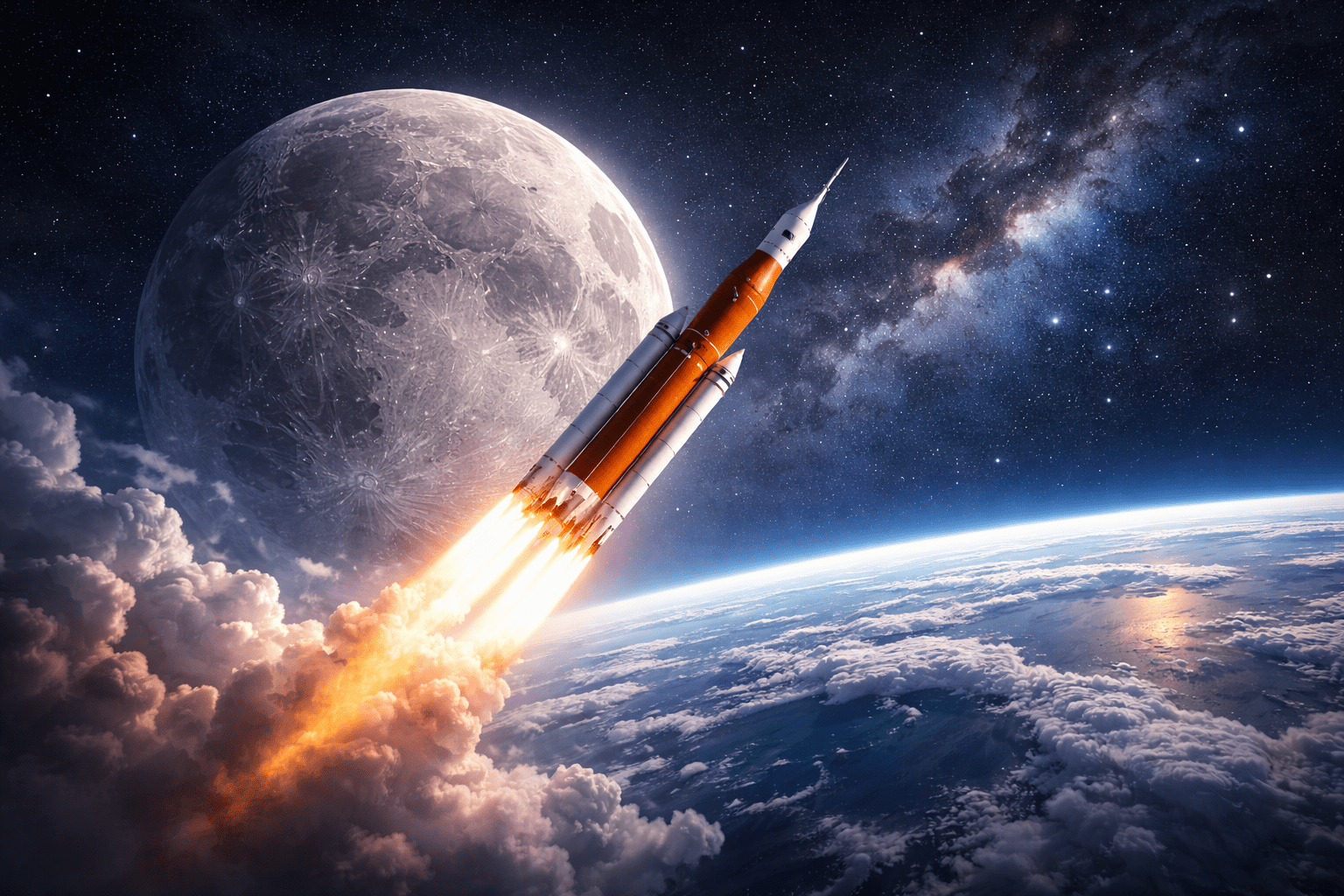
The race to the lunar surface has entered a critical new phase. Recently, NASA officials made a powerful statement regarding the transition from their first successful uncrewed test to the upcoming crewed flight: “The work ahead is greater than the work behind us.” As the NASA Artemis II Mission 2026 approaches, the focus has shifted from mere testing to ensuring the absolute safety of the four astronauts who will orbit the Moon.
For tech investors and aerospace enthusiasts in the USA, UK, and Canada, this mission is not just a scientific endeavor; it is the cornerstone of a multi-billion dollar lunar economy. In this comprehensive guide, we analyze the technical hurdles, the strategic delays, and the massive financial implications of the NASA Artemis II Mission 2026.
The Strategic Shift: Moving the NASA Artemis II Mission 2026
Originally planned for late 2024 or 2025, the NASA Artemis II Mission 2026 has been pushed to September 2026. This decision was not made lightly. NASA Administrator Bill Nelson emphasized that when human lives are at stake, “safety is the top priority.”
The “work behind us” includes the successful Artemis I mission, which proved that the Space Launch System (SLS) rocket—the most powerful in the world—and the Orion spacecraft can reach lunar orbit. However, the NASA Artemis II Mission 2026 involves putting humans on that rocket, which introduces a 100x increase in complexity.
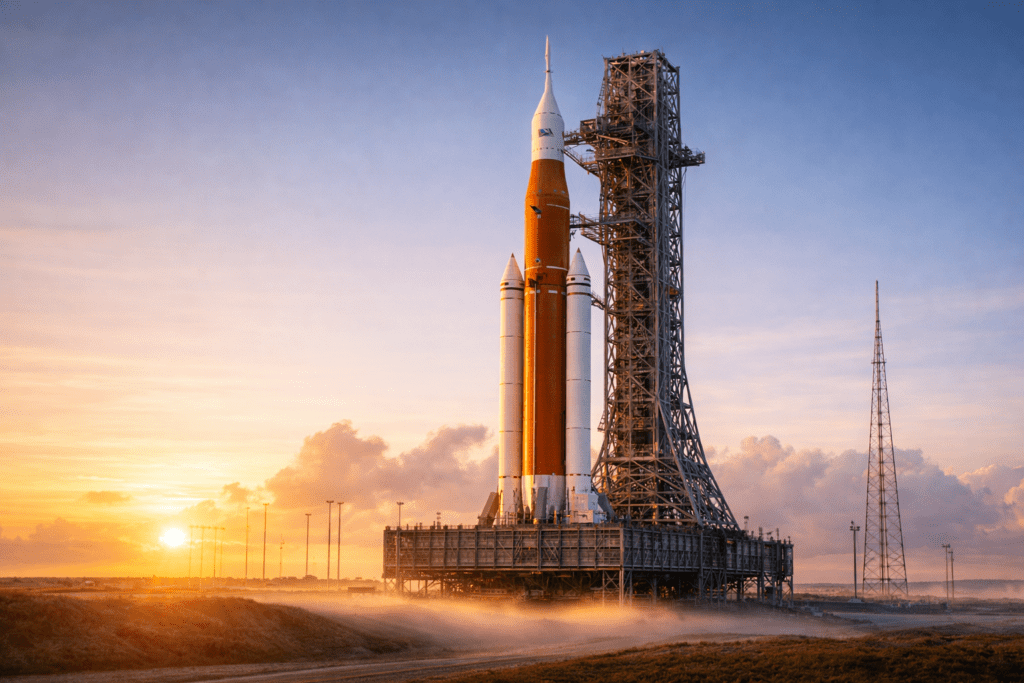
The Technical “Work Ahead”: Overcoming Deep Space Obstacles
Why did NASA officials say the work ahead is greater? It comes down to three primary engineering challenges that must be perfected before the NASA Artemis II Mission 2026 can lift off.
Read More: Top Fintech and Investment Trends in Saudi Arabia and Turkey
1. The Orion Heat Shield Anomaly
During the Artemis I re-entry, the Orion heat shield experienced unexpected “charring.” While the capsule stayed safe, pieces of the heat shield wore away differently than computer models predicted. For the NASA Artemis II Mission 2026, engineers are redesigning thermal protection layers to ensure the crew survives the 25,000 mph re-entry into Earth’s atmosphere.
2. Life Support Systems (ECLSS)
Artemis I was a “ghost ship” with no humans. The NASA Artemis II Mission 2026 requires a fully functional Environmental Control and Life Support System. This system must scrub CO2, manage oxygen levels, and maintain temperature for four people for 10 days in the harsh radiation of deep space.
3. Electrical Redundancy
Recent tests revealed issues in the motor controllers of the Orion capsule’s life support system. NASA has decided to replace these parts entirely, proving that the “work ahead” is a meticulous process of trial and error.
The Economic Impact of the NASA Artemis II Mission 2026
From a financial and tech news perspective, the NASA Artemis II Mission 2026 is a massive driver for Tier-1 economies. The program is a catalyst for high-CPC sectors including aerospace engineering, satellite communications, and defense contracting.
-
Aerospace Stocks: Companies like Lockheed Martin (Orion), Boeing (SLS), and Northrop Grumman (Solid Rocket Boosters) are seeing long-term contract stability.
-
The Lunar Economy: NASA’s goal isn’t just a flag-planting mission. It’s about building the “Gateway” station and permanent lunar bases, which opens doors for private mining and energy companies.
-
Global R&D: The mission supports over 70,000 jobs in the USA alone, with significant partnerships in Canada (CSA) and Europe (ESA).
Meet the Crew: The Human Element of the 2026 Mission
The success of the NASA Artemis II Mission 2026 rests on the shoulders of four brave individuals. This crew represents the diversity of modern space flight:
-
Reid Wiseman (Commander): A veteran of the International Space Station.
-
Victor Glover (Pilot): The first person of color to participate in a lunar mission.
-
Christina Koch (Mission Specialist): The woman who holds the record for the longest single spaceflight by a woman.
-
Jeremy Hansen (Mission Specialist): Representing the Canadian Space Agency.
Their 10-day journey will take them 6,400 miles beyond the far side of the Moon, further than any human has ever traveled.

Conclusion: A Bridge to the Future
The phrase “the work ahead is greater than the work behind us” is a reminder that excellence in technology requires patience. The NASA Artemis II Mission 2026 is the essential bridge to Artemis III (the lunar landing) and the eventual human mission to Mars.
As we watch the progress at Kennedy Space Center, it is clear that the NASA Artemis II Mission 2026 will be the defining moment of the 21st-century space age, proving that humanity is ready to become a multi-planetary species.
Frequently Asked Questions (FAQ)
Q1: What is the exact launch date for the NASA Artemis II Mission 2026?
As of the latest NASA updates, the mission is scheduled for September 2026, though this remains subject to the completion of hardware testing.
Q2: Will the astronauts land on the moon during Artemis II?
No. The NASA Artemis II Mission 2026 is a lunar flyby. They will orbit the Moon and return to Earth to test all systems. The actual landing will happen during Artemis III.
Q3: How much does the NASA Artemis II Mission 2026 cost?
The Artemis program is estimated to cost nearly $93 billion through 2025, with each SLS launch costing approximately $2 billion to $4 billion.