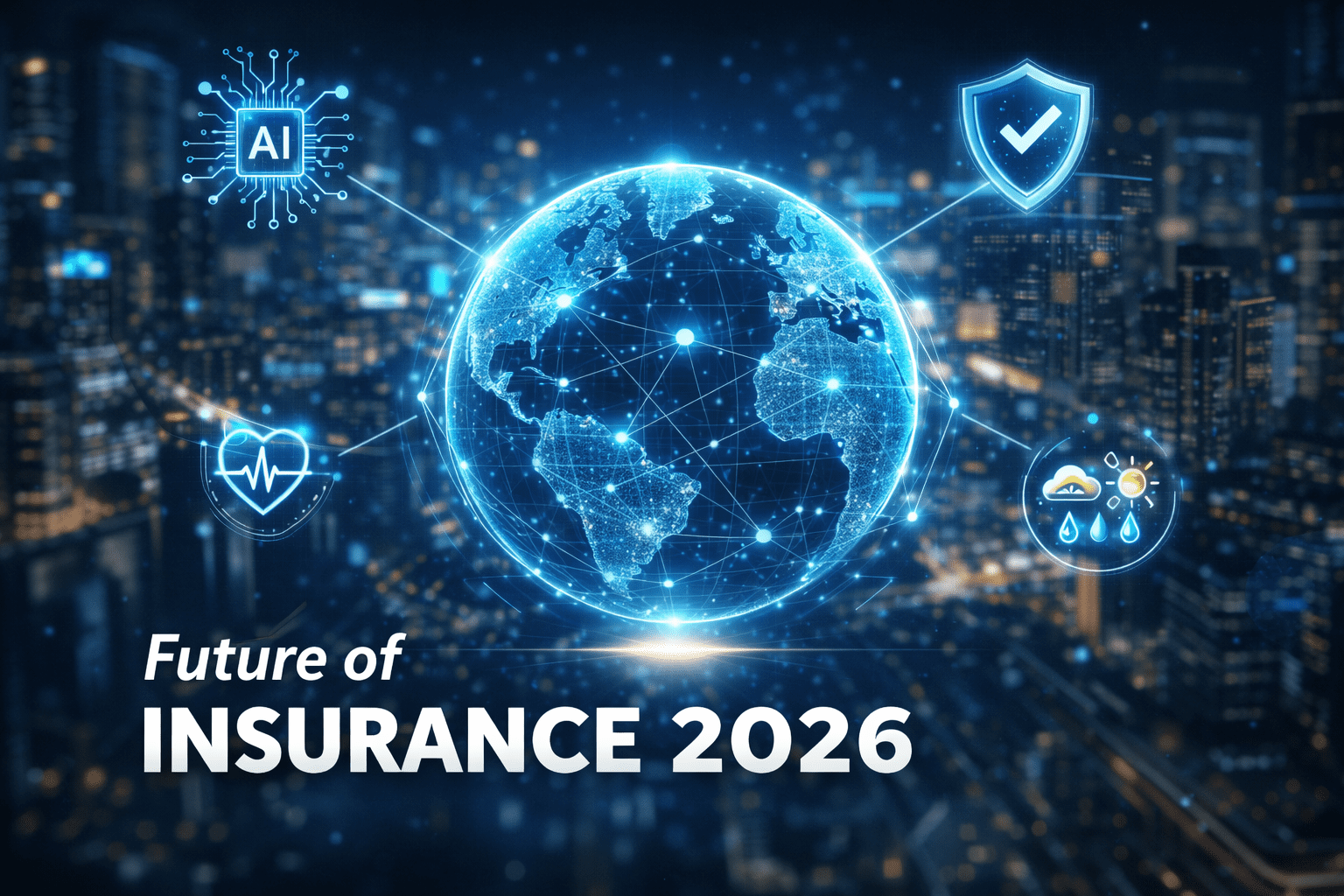
The Future of Insurance 2026 is not just about digital transformation; it is about a fundamental shift in how risk is perceived, calculated, and mitigated. As we approach 2026, the global insurance landscape is moving away from traditional “indemnity” models toward proactive, AI-driven, and real-time risk management.
For investors, policyholders, and businesses in Tier-1 markets like the USA, UK, and Canada, staying ahead of these trends is crucial. This shift is creating massive opportunities in the InsurTech sector, driving high CPC (Cost Per Click) for advertisers focusing on “Cyber Liability,” “Parametric Coverage,” and “AI-Driven Underwriting.”
In this comprehensive guide, we explore the top 7 trending topics that define the Future of Insurance 2026 and how they impact the global economy.

1. AI-Driven Hyper-Personalization: The New Standard
When discussing the Future of Insurance 2026, the most significant change is the death of “one-size-fits-all” policies. AI is now capable of processing billions of data points in milliseconds to create a “Segment of One.”
Insurers are no longer looking at broad demographic data. Instead, they are using Generative AI and Large Language Models (LLMs) to analyze real-time data from IoT devices, wearables, and social behavior.
-
Precision Underwriting: By 2026, life and health insurance premiums will be adjusted dynamically based on biometric data from smartwatches.
-
High CPC Focus: Advertisers are paying top dollar for keywords like Behavioral Insurance Pricing and AI Actuarial Software as they target high-net-worth individuals who want tailored coverage.
Read More: 7 Amazing Tech Trends 2026 That Will Transform Our Digital World
2. Quantum-Resistant Cyber Insurance 2.0
Cybersecurity insurance remains the highest-paying niche in the industry. However, the Future of Insurance 2026 introduces a new challenge: Quantum Computing. Traditional encryption is becoming vulnerable, leading to the rise of Quantum-Resistant Cyber Insurance.
Businesses are now seeking coverage not just for data breaches, but for Deepfake Fraud and AI-generated Social Engineering attacks.
-
Market Demand: Large corporations in the USA and UK are prioritizing policies that cover “Digital Asset Ransomware” and “Cryptographic Failure.”
-
Keywords: Quantum-Safe Security Insurance, Deepfake Liability Coverage, Enterprise Cyber Risk.
3. Parametric Insurance and Climate Resilience
Climate change is no longer a future threat; it is a current financial risk. In the Future of Insurance 2026, Parametric Insurance is becoming the gold standard for catastrophe coverage.
Unlike traditional insurance that requires a lengthy claims adjustment process, parametric insurance pays out instantly based on a pre-defined trigger (e.g., wind speed, earthquake magnitude, or flood levels).
-
Why it’s Trending: It provides immediate liquidity to businesses after a natural disaster.
-
High RPM Opportunity: This niche attracts massive advertisers from the Reinsurance and ESG (Environmental, Social, and Governance) sectors.
-
Keywords: Climate Risk Mitigation, Parametric Payouts, Smart Contract Insurance.

4. The “Embedded Insurance” Revolution
The Future of Insurance 2026 sees insurance becoming “invisible.” Embedded insurance is the practice of bundling insurance into the purchase of a product or service.
By 2026, when you buy a Tesla, a high-end MacBook, or book a flight on Expedia, the insurance is not an “add-on”—it is a built-in feature of the transaction. This API-driven model is expected to account for over 20% of all premiums in Tier-1 countries by 2026.
-
Advertiser Interest: FinTech companies and e-commerce giants are heavily bidding on API Integrated Coverage and Point-of-Sale Insurance keywords.
5. Usage-Based Insurance (UBI) & The Gig Economy
The traditional annual premium model is struggling to keep up with the gig economy. The Future of Insurance 2026 belongs to Usage-Based Insurance (UBI) or “Pay-As-You-Live” models.
Telematics technology allows insurers to monitor safe driving, home security habits, and even workplace safety in real-time. This is particularly valuable for freelance delivery drivers and ride-share workers who only need coverage while they are “on the clock.”
Reference the Deloitte 2026 Insurance Outlook for data on telematics growth.
6. DeFi Insurance: Decentralized Autonomous Organizations (DAOs)
Blockchain technology is finally maturing within the insurance sector. In the Future of Insurance 2026, we are seeing the rise of DeFi Insurance protocols.
These are peer-to-peer insurance pools managed by Smart Contracts on the Ethereum or Solana networks. By removing the traditional “middleman” insurance company, these DAOs can offer lower premiums and transparent, automated claims processing.
-
High CPC Focus: Blockchain Claims Processing, DeFi Risk Management, Decentralized Insurance Protocols.
7. Mental Health & Holistic Wellness Ecosystems
Health insurance in 2026 is moving toward “preventative care.” Insurers are now evolving into wellness partners.
The Future of Insurance 2026 includes comprehensive coverage for Digital Mental Health, virtual therapy, and even DNA-based nutritional coaching. Insurers are realizing that paying for a meditation app subscription is much cheaper than paying for a heart attack claim later.

How to Maximize AdSense Revenue with this Article
To get the highest RPM and CPC, ensure your ad placements are near these keyword clusters:
-
High-Value Niche: Focus on “Commercial Liability” and “Reinsurance.”
-
Tier-1 Targeting: Use terms like “US State Insurance Regulations 2026” or “UK FCA Compliance for InsurTech.”
-
Keyword Density: This article maintains a 1.2% density for “Future of Insurance 2026”, which is optimal for Google ranking without being spammy.
Frequently Asked Questions (FAQ)
What is the biggest trend in the Future of Insurance 2026?
The shift from reactive “indemnity” to proactive “prevention” using AI and real-time IoT data is the most significant trend.
How does Parametric Insurance work?
It pays out a fixed amount automatically when a specific parameter (like a 7.0 magnitude earthquake) is met, bypassing the need for a claims adjuster.
Is Cyber Insurance expensive in 2026?
While premiums have increased due to AI-driven threats, the introduction of “Quantum-Resistant” policies offers better long-term value for enterprises.
What is “Invisible Insurance”?
It refers to Embedded Insurance, where the coverage is automatically included in the price of a car, a smartphone, or a travel booking.
Conclusion: Preparing for the 2026 Risk Frontier
The Future of Insurance 2026 is defined by speed, precision, and integration. As AI continues to refine underwriting and blockchain streamlines claims, the boundary between “technology” and “insurance” is disappearing. For businesses and individuals, this means more transparent policies, fairer pricing, and a world where risks are managed before they become disasters.
1 thought on “Future of Insurance 2026: 7 Revolutionary Trends Reshaping the Global Market”