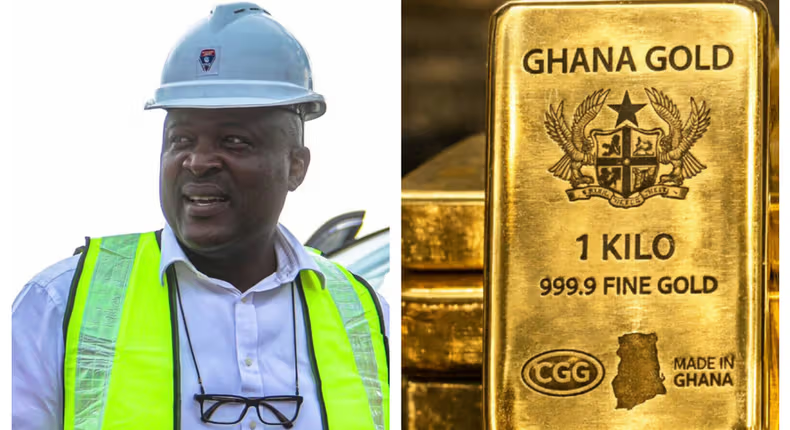
The Mahama Damang Gold Mine acquisition has officially redefined the West African economic landscape in 2026. In a move that has sent shockwaves through the global commodities market and sparked a wave of national pride across West Africa, prominent Ghanaian businessman Ibrahim Mahama has officially secured a controlling interest in this vital asset.
This transition comes as the long-standing South African operator, Gold Fields, completes its strategic exit, marking the end of an era and the beginning of a bold new chapter for indigenous resource management. As we move through 2026, the narrative of “African resources for Africans” is no longer just a political slogan—it is a billion-dollar reality.
The acquisition of the Mahama Damang Gold Mine signifies a tectonic shift in the mining landscape, proving that local firms now possess the technical expertise and financial muscle to compete with multinational giants.
The 2026 Deal: How the Mahama Damang Gold Mine Acquisition Folded
The transition of the Mahama Damang Gold Mine from South African control to a Ghanaian-owned entity—under the umbrella of Mahama’s Engineers & Planners (E&P)—followed months of rigorous negotiations.
For years, the South African firm Gold Fields had signaled a shift in its global portfolio, focusing on high-growth, long-life assets in Australia and South America. This created a strategic opportunity at Damang, a mine that required a “local-first” approach to maximize its remaining life-of-mine potential.
Key Details of the 2026 Agreement:
-
Asset: Damang Gold Mine (Western Region, Ghana).
-
Acquiring Party: Ibrahim Mahama (via a Ghanaian-led consortium).
-
Stake: Majority controlling interest (approx. 90%).
-
Government Role: The Government of Ghana retains its statutory 10% interest.
Read More: Global Real Estate Trends 2026 Top Investment Hotspots in USA, UK, UAE, Canada, and Australia
Why the South African Exit Favored the Mahama Damang Gold Mine
The exit of South African mining firms from Western African assets has been a recurring theme in the mid-2020s. For the departing South African firm, the decision was driven by portfolio rebalancing and rising operational costs.
However, for the Mahama Damang Gold Mine, this exit is a blessing. Local ownership allows for a leaner management structure and a deeper understanding of the local regulatory environment. Ghana’s 2025-2026 tightened regulations on local content made it increasingly advantageous for assets to be locally owned to benefit from tax incentives and streamlined licensing.
Ibrahim Mahama: The Architect of the Mahama Damang Gold Mine Future
Ibrahim Mahama is no stranger to the mining sector. As the founder of Engineers & Planners, he has spent decades building the largest indigenous mining services company in West Africa.
By securing the Mahama Damang Gold Mine, Mahama has moved from being a service provider to an owner-operator. This is a critical distinction in the 2026 economic climate. It demonstrates that Ghanaian entrepreneurs are moving up the value chain, capturing the full profit margin of the gold industry rather than just the service fees.
Technical Revitalization of the Mahama Damang Gold Mine
Under Mahama’s leadership, the 2026 strategy for the Mahama Damang Gold Mine involves several high-tech upgrades:
-
Advanced Geophysics: Utilizing AI-driven geological modeling to identify deeper ore bodies that were previously overlooked.
-
Operational Efficiency: Leveraging E&P’s existing fleet of heavy machinery to reduce the cost per ounce of gold produced.
-
Sustainable Energy: Integrating solar farms to power the processing plants, reducing the mine’s carbon footprint and energy costs.
According to recent reports from the Ghana Chamber of Mines, indigenous ownership often leads to faster decision-making in technical upgrades compared to foreign-owned firms waiting for board approval from overseas.
Economic Impact: What This Means for Ghana’s Economy
The Mahama Damang Gold Mine deal is more than just a business transaction; it is a catalyst for national economic growth.
1. Job Creation and Talent Retention
Unlike multinational firms that often repatriate technical roles to their home countries, the Mahama Damang Gold Mine is expected to prioritize Ghanaian talent. This includes high-level engineering, metallurgical, and administrative roles that were previously held by expatriates.
2. Retention of Foreign Exchange (Forex)
One of the historical challenges for Ghana’s economy has been the “repatriation of profits.” With the Mahama Damang Gold Mine being locally owned, a significantly higher percentage of the gold revenue stays within the Ghanaian banking system, strengthening the Cedi.
3. Boosting the Local Supply Chain
Mahama’s ownership is expected to create a “multiplier effect.” Local catering, transport, and safety equipment companies are likely to see increased contracts, as the ownership structure aligns more closely with the community’s interests.
The Geopolitical Context: Economic Nationalism in 2026
Across the African continent, we are witnessing a “Mining Renaissance.” From the lithium mines of Zimbabwe to the copper belts of Zambia, indigenous billionaires and state-backed firms are reclaiming control over natural resources.
The Ghanaian government’s support for the Mahama Damang Gold Mine reflects a broader policy of Economic Sovereignty. By 2026, the Ghana Integrated Aluminium Development Corporation (GIADEC) has set the blueprint for local ownership, and this acquisition is the crowning achievement of this movement.
Challenges and The Road Ahead for the Mahama Damang Gold Mine
Ownership comes with immense responsibility. The success of Ibrahim Mahama at the Mahama Damang Gold Mine will be measured by three factors:
-
Environmental Stewardship: Following through on reclamation projects and ensuring that the “Green Mining” standards of 2026 are met.
-
Gold Price Volatility: Managing the mine’s profitability in a fluctuating global market where gold prices can be unpredictable.
-
Community Relations: Navigating the expectations of the Damang and Tarkwa local communities regarding social corporate responsibility (CSR).
SEO FAQ: Understanding the Mahama Damang Gold Mine Deal
Q: Who bought the Damang Gold Mine in 2026?
A: Ghanaian businessman Ibrahim Mahama secured a controlling interest, rebranding the operational outlook as the Mahama Damang Gold Mine project.
Q: Why is this considered a historic deal?
A: It is one of the first times a major large-scale gold mine in Ghana has transitioned from a Tier-1 multinational (Gold Fields) to a 100% indigenous-led management.
Q: Will the mine continue to operate under the same name?
A: While “Damang” remains the geographical name, it is now widely recognized as the Mahama Damang Gold Mine acquisition within the industry.
Conclusion: A Golden Future for Ghana
The acquisition of the Mahama Damang Gold Mine by Ibrahim Mahama is a watershed moment for Ghana. It signals the maturity of the Ghanaian private sector and the end of the era where African nations were merely “landlords” to foreign mining interests.
As the first gold bars are poured under the new Ghanaian management in late 2026, the world will be watching. If successful, the Mahama Damang Gold Mine will serve as a blueprint for the rest of the continent, proving that with the right vision, expertise, and leadership, Africa can indeed own its future.
1 thought on “7 Strategic Impacts of the Mahama Damang Gold Mine Takeover in 2026”